
One bedroom stays freezing while the room next door sits 10 degrees warmer, and no amount of thermostat fiddling ever splits the difference. Maybe the vents whistle every time the system starts, or dust keeps blowing out of registers you cleaned last month, or the power bill climbs while comfort goes the other direction. Plenty of homeowners spend money on new equipment chasing those problems when the real culprit is hiding in the crawl space or attic. Calderon HVAC and Plumbing Inc handles ductwork services for properties in Asheboro, NC, and nearby areas, identifying leaks, sagging, and sizing errors that prevent conditioned air from reaching the rooms you're paying to heat and cool.
Property owners and builders rely on Calderon HVAC and Plumbing Inc, a locally owned heating, cooling, and plumbing company headquartered in Asheboro, NC, with more than 15 years of trade experience. Duct installation, replacement, repair, sealing, and airflow balancing are core parts of what our team performs, all aimed at ensuring a system delivers what it was designed to deliver. Commercial buildings, new construction projects, and insulated duct systems are also within our scope, helping ensure efficiency and steady airflow in spaces of all sizes.
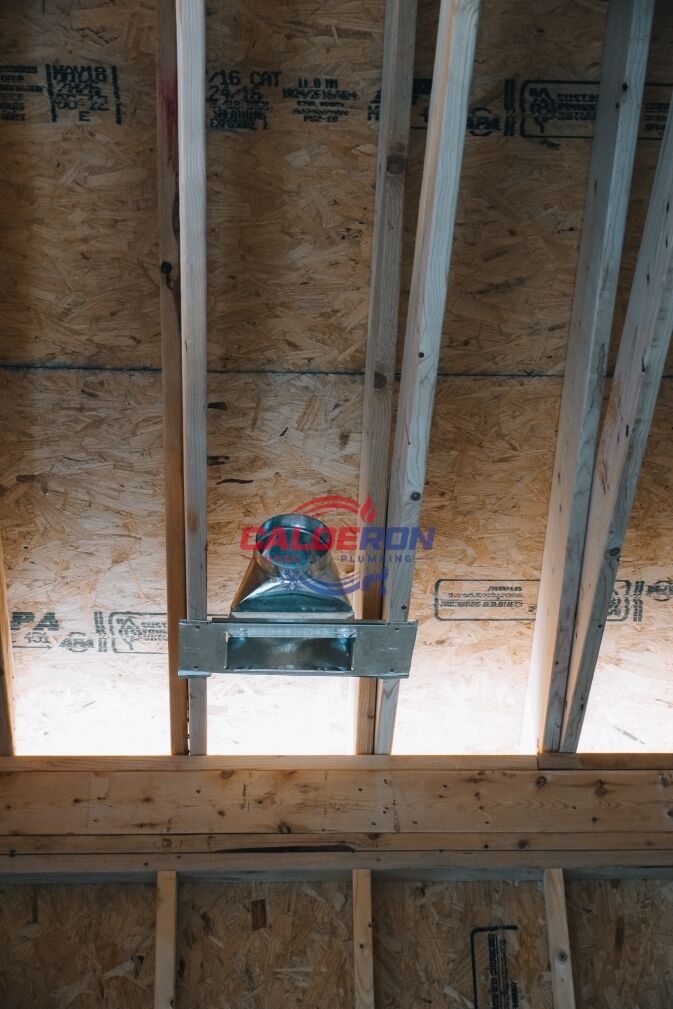
Ductwork sits out of sight, which is exactly why it goes unexamined for decades. A system can be perfectly sized and freshly installed, but if the ducts leak, sag, or run too small, the house still won't feel the way it should. Signs pile up gradually. Certain rooms never reach the thermostat setting, registers barely push air on the far end of the house, doors swing shut on their own when the system kicks on, dust collects faster than it should, and the equipment runs long cycles without accomplishing much.
Digging into it usually turns up a familiar set of problems. Flexible duct installed with sags or sharp bends chokes airflow the same way a kinked garden hose does. Joints sealed with actual duct tape dry out and let go within a few years, leaving gaps that dump conditioned air into an attic or crawl space. Uninsulated runs passing through a 130-degree-Fahrenheit attic lose a chunk of their cooling before reaching anywhere useful. Homes with a finished basement, bonus room, or addition often have duct systems never sized for the extra square footage. Return-side leaks create their own headache, pulling in musty crawl space air and circulating it through the whole house. Rodents and storm damage account for the rest, and a disconnected run blowing into an attic wastes everything that goes through it.
Sorting it out begins with an inspection rather than a guess. Our technicians trace the duct layout, look for disconnections and crushed sections, check the condition of the insulation, measure static pressure to see whether the system is fighting itself, and evaluate whether the return capacity matches the supply capacity. That last piece gets overlooked constantly, and plenty of homes have generous supply vents with nowhere near enough return. Once we know what's happening, the fix might mean sealing joints with mastic instead of tape, resizing specific runs, adding a return, replacing sagging flex with properly supported duct, insulating attic runs, or balancing dampers so air distributes evenly. Any HVAC contractor worth hiring will show you what they found and explain why a particular repair matters before the work starts.
The payoff shows up faster than people expect. Rooms that never cooperated finally hold temperature, airflow evens out across the house, and equipment stops running marathon cycles trying to compensate for losses it can't make up. Sealing a leaky system often reduces energy waste enough to show up on the next utility bill, and reducing crawl space air infiltration improves how a house smells and how it feels. Doing this work before replacing equipment also means the new system is sized for a duct network that actually functions, rather than one that quietly sabotages it.
We work on duct systems for homes, commercial buildings, and new construction and renovation projects of varying sizes.

Offices, retail spaces, restaurants, and other small industrial buildings have their own airflow demands, and equipment from different decades often shares the same building. Our team handles installation, modification, and repair on commercial systems while scheduling around your business hours. Tenant improvement projects get the same attention, including layout changes when a space gets reconfigured.
Builders and general contractors can hand off the duct scope with confidence, knowing the layout will be designed the first time. Planning happens alongside framing and the other trades, preventing the compromises that arise when ductwork is squeezed in at the end. Growing out of the construction world ourselves, our team understands how to hold a schedule without cutting corners.
Adjusting dampers and verifying airflow at each register helps balance rooms that never seem to match the rest of the house. Measurements guide the work, so nothing gets set by feel or guesswork. Seasonal adjustments help too, since pushing more air upstairs in summer and downstairs in winter costs nothing and changes how a home feels.
New duct systems get designed around the actual building rather than assembled from whatever fits. Layout, sizing, return placement, and material selection all get worked out before anything goes in. Properly designed ductwork services are what let a system deliver the performance its efficiency rating promises.
Disconnected runs, crushed sections, torn flex, and rodent damage all get repaired rather than ignored, since every gap wastes air you already paid to condition. Our technicians locate the trouble spots during inspection and fix them properly rather than patching over the symptoms. Storm damage and pest problems both warrant a duct check once the immediate issue gets resolved.
Well-installed metal ductwork can last 25 years or longer, while flexible duct tends to sag, tear, and lose insulation value considerably sooner. Replacement makes more sense than repair once a system has multiple failures, moisture damage, or sizing that was wrong from the start. Most residential replacements run two to three days depending on attic and crawlspace access.
We use mastic sealant on joints and connections, since it stays flexible and holds up for decades rather than drying out like tape does. Sealing the return side often does as much for indoor air quality as it does for efficiency. Homeowners looking for the best value in ductwork service usually find sealing at the top of that list.
Ducts running through unconditioned attics, crawl spaces, and garages need insulation to keep conditioned air at temperature on its way to the room. Uninsulated cold ducts also sweat during humid summers, and that condensation soaks insulation, stains ceilings, and eventually feeds mold. Properly insulated systems solve both problems at once.
Outdoor units need a couple of feet of clear space around them, so shrubs crowding the condenser make the whole system work harder than it should. Air conditioning services we provide include AC repair, installation, replacement, maintenance, tune-ups, and emergency response for homes and commercial buildings. New construction cooling is also designed for the property rather than pulled off the shelf.
Gas furnaces vent combustion gases outside, which is why a cracked heat exchanger is one of the few problems we'll tell you to shut the system down over. Heating services we provide include furnace and heat pump repair and installation, seasonal maintenance, and emergency calls at any hour. Commercial buildings, new construction jobs, and boiler service are all part of what we offer.
Auxiliary heat strips kicking on constantly will send a winter electric bill somewhere nobody wants it to go, and that's often a sign the system is undersized or worn out. HVAC installation and replacement from our crew includes residential and commercial systems, high-efficiency equipment, load-based sizing, duct modifications, and smart thermostat installs.
Cheap fiberglass filters catch the big stuff and let the fine particles sail right through, which is where an upgrade usually pays off. Indoor air quality equipment we offer and install includes whole-home air cleaners, purification systems, UV lights, media filtration, dehumidifiers, ventilation improvements, and duct cleaning.
Server rooms, kitchens, and open sales floors in the same building all need different things from the equipment serving them. Commercial HVAC services we provide include rooftop unit maintenance, repairs, preventive maintenance, equipment replacement, tenant improvements, and installations ranging from small commercial to industrial. Our service agreements help keep filters, belts, and coils on a schedule rather than as an afterthought.
Hard water leaves mineral scale inside fixtures and appliances, gradually restricting flow until something stops working right. Plumbing repairs we handle include leaks, pipe damage, toilet and faucet issues, garbage disposal problems, and clogged drains in homes and businesses. Emergency service runs 24/7, so nobody has to wait out a bad leak until Monday morning.
Tankless units need descaling every year or two depending on your water, and skipping it shortens the life of an otherwise long-lasting system. Water heater services we offer include repair, replacement, maintenance, and new installation of tank and tankless models, gas or electric, residential or commercial. We'll size the unit based on how much hot water your household or business actually uses.
Every drain has a P-trap that holds a little water to block sewer gas, and a guest bathroom nobody uses can dry out and start to smell. Drain and sewer services we provide include drain cleaning, hydro jetting, camera inspections, clog removal, root intrusion removal, sewer line repair, and sewer line replacement. Recurring backups in the same spot usually mean a line issue rather than a stubborn clog.
Water lines buried in a yard can develop leaks that never surface, showing up instead as a bill that climbs for no obvious reason. Repiping and water line services we handle include whole-home repiping, water line repair, water line replacement, pipe upgrades, commercial piping, and copper or cross-linked polyethylene (PEX) installations. New construction plumbing is also run and pressure-tested before anything is covered up.
Older tubs and showers were built for different valve sizes, so a straight swap sometimes means opening a wall, whether anyone planned on it or not. Plumbing installation and replacement work we do includes toilets, sinks, faucets, tubs, showers, fixtures, kitchen and bathroom remodels, and new construction plumbing. Knowing what's behind the tile before demolition starts keeps a remodel on schedule.
Backflow prevention devices are required on many commercial properties, and they need regular testing to remain compliant. Commercial plumbing services we deliver include repairs, preventive maintenance, plumbing replacements, tenant improvements, and service agreements for restaurants, offices, retail buildings, and small commercial spaces. Handling maintenance during off hours keeps your operation running while the work gets done.
Our team brings practical planning, straightforward communication, and attentive workmanship to every duct project.
Somebody's reachable at any hour, so a collapsed duct or a system suddenly moving no air gets handled without a long wait.
Fifteen-plus years spent crawling through attics and crawl spaces across this area means our crew recognizes the local construction quirks that cause airflow trouble, and treating customers right matters just as much to us.
Full duct replacement is a real investment, and financing options keep the project within reach when the timing isn't ideal.
Inspections and quotes cost you nothing, and you'll get a clear picture of what needs to be done versus what can wait.
Materials and equipment from all the leading manufacturers go into our work, chosen for durability rather than whatever's cheapest.
Behind every installation and repair sits a one-year workmanship warranty on our labor.
Typically it does, since leaky ducts can lose a meaningful share of conditioned air before it ever reaches a room. Duct runs traveling through hot attics or damp crawl spaces waste the most, which describes a great many homes in this part of the state. Sealing with mastic rather than tape gives you a repair that lasts for decades, not a few years.
A full replacement in an average home usually takes two to three days, depending on access to the attic and crawl space. Partial repairs, sealing work, and airflow balancing often wrap up in a single visit. Commercial ductwork and new construction projects follow the overall build schedule since other trades need the space too.
Well-installed metal ductwork often lasts 25 years or longer, while flexible duct tends to sag, tear, or lose its insulation value sooner. Replacement makes more sense than repair once you're finding multiple disconnected runs, crushed sections, or moisture damage. Homes that have added rooms or finished a basement usually need duct modifications regardless of the existing system's age.
Poor duct design accounts for most of it, whether that's undersized runs, too few returns, or long, flexible sections with sags that choke off airflow. Leaks and disconnections in the crawl space let air escape before it arrives where you wanted it. Rooms added onto a house after the original build are frequent offenders since they often got tied into ductwork never sized for the extra load.
Cold ducts sitting in humid, unconditioned space collect condensation the same way a glass of iced tea does on the porch. Missing or compressed insulation is the usual culprit, and the moisture that drips off can soak insulation, stain ceilings, and eventually feed mold. Properly insulated duct systems solve it while keeping the cooled air where it belongs.
FAQs reviewed by Filiberto Calderon, owner of Calderon HVAC and Plumbing Inc, an experienced and local HVAC contractor.
Reach out to Calderon HVAC and Plumbing Inc for a free ductwork inspection and a straightforward explanation of what your system is doing. We'll find where the air is going and get it back where it belongs.
Business Name: Calderon HVAC and Plumbing Inc
Address: Asheboro, NC, 27203
Phone: 336-964-3611
Business Hours: 24/7
24 Hour Emergency Service Available
Ask us about financing options
Contact us about available promotions
One-year workmanship warranty
